 tamilabo
Notes
The game I spent nearly three years on had 88 downloads
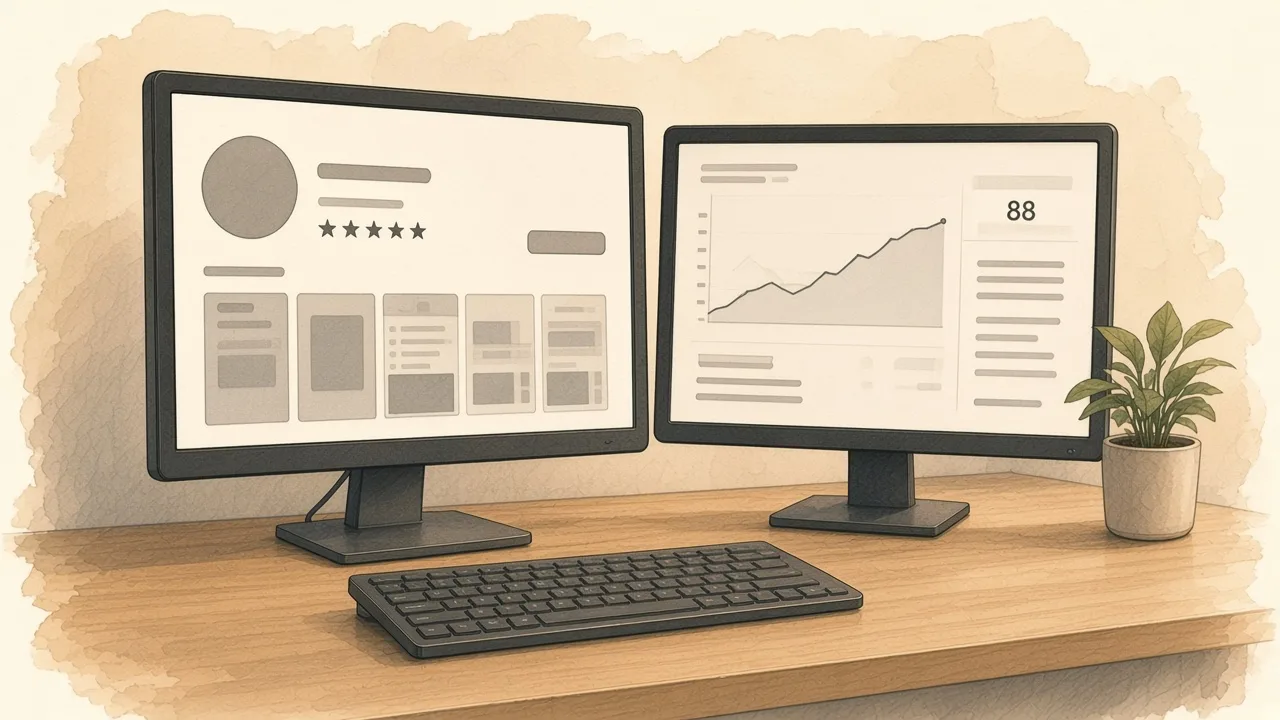
A little under two weeks after release: 88 downloads. Ad revenue under 100 yen. Getting comfortably well-off from indie development was naive.
It went fast. Animal Panic Puzzle, released on 13 August 2020, was already a little under two weeks old. Downloads, iOS and Android together, sat around 88.
I had no idea, then, whether 88 was a lot or a little. Worldwide, in twelve languages. For something that global, 88 was honestly a pretty pathetic number.
If those 88 downloads had been earning, I could still have kept the motivation to update. Sadly, ad revenue at the time was not even 100 yen.
If this were a company, it would be a huge loss. I want to punch the version of myself who thought that if I just released it and promoted it a bit, I would easily recoup the development cost.
There are things you only understand by doing them. In my case, I am the sort of person who will not believe it until I have actually tried.
That personality meant I was fairly optimistic until release. Or rather, I was looking down on it. When the lid came off, the mobile app market was a redder ocean than I had imagined. A sea of blood, honestly.
Markets that are not a red ocean barely exist. Wherever you enter, you need a strategy. A lot of people who start indie work, myself included, are salaried employees. Earning from that mindset, and keeping it going as a business, is not ordinary work. People who make a living from apps alone have my real respect.
Earning money is very hard. And I still want money. How do you get to a place where you can earn.
Keep shipping until something works — that is exactly right, and a lot of people who got to monetization have shipped several titles. They narrow in on the ones that reacted, and turn them into a series. That seems common.
Someone who actually runs that style is Jii-ma, shipping at the astonishing pace of several titles a year. If you make that many, some will be total misses, and some will never even ship. And they still develop, every day, and still ship. That is amazing, Jii-ma.
Watching Jii-ma, I noticed something. Maybe my own development style is not built for hypercasual at all.
On my side, I cannot make several apps in a year.
People making mobile apps really are fast from development to release. On that point alone, my body is not built for hypercasual. I have to look again at my own style.
That said, making a big game as an individual is still pretty hard.
Anyway. Freemium had become the default, and I wanted to ask whether it was really the right choice for me to keep going as an indie.
For most users, app equals free is already obvious, so of course they do not feel like paying to download anymore. On top of that, games on phones sit in the spare-time slot. Not many people buy a phone because they actively want to play. So it is hard to get as far as paying to play.
People like Jii-ma, where freemium and the work actually fit the market, are fine. That is their style, at least.
So I had been thinking I would keep shipping phone apps for the next titles too. At the time, that was wobbling. Or more accurately, I was stopping the plan of aiming only at the smartphone app market.
Luckily I use Unity, so moving to other platforms is relatively easy. Unity is amazing!
The problem is the content you port. Put a hypercasual game on Steam or the Nintendo eShop and nobody is going to buy it. A thing built mobile-first will not sell on consoles. So I was thinking of setting the target on Steam, for example, and then putting it in the paid category on mobile.
Yes. I was moving toward dropping the freemium approach.
Have people pay for the content. I wanted to go back to that basic, simple business.
The main markets would be Steam, Nintendo Switch, DLsite, the Mac App Store, iOS, and Android. Specs comfortable on Switch, a scale I could still make alone, and something that would not look out of place as a console game.
Switch had, at the time, opened access applications for indies, and I had applied. It might not go through, so I also wrote that Switch might drop out.
And yet, after all that, I might still put an app out on mobile...
I spent 1,000 days on Animal Panic Puzzle. On a game at the level of killing a little spare time.
The breakdown, probably: 40 percent thinking. About 30 percent slacking. If I had cut that down, it should have been a title I could ship in about a year, which means I spent two or three times as long. That development period obviously had to improve.
Going forward I thought I would cap development-to-release at under a year, and make games you could play as console games.
Rethink freemium hypercasual. Make in a genre I can finish within a year on a console base, and look at Switch or Steam. That is what I wrote then.
I have lined up a lot of this, but it comes down to something I only understood after shipping. The person who was naive was me, before release. That's it!